Jóhann Kristinn Pétursson was born on February 9, 1913, in the small Icelandic town of Dalvík. He was the third of nine children. Everyone else in the family was average in height except for him. For the first 15 years of his life, he grew normally. Then, around the age of 16, his body began to grow at an incredible rate. By age 20, he stood seven feet, eight inches tall and weighed about 359 pounds. He wore a size 24 shoe.
Doctors later said he did not seem to have the more common forms of gigantism. His body was unusually well-proportioned. He was not awkward-looking or uneven. He was simply enormous. No one in Iceland had ever seen anything like him before. Doctors did not fully understand why he grew so large.
One surprising thing about Jóhann’s early life was how normal people treated him. The people of Dalvík did not turn him into a spectacle. More than one Icelandic writer later said that locals “barely raised an eyebrow when the giant walked by.” As a teenager, he was popular for ordinary reasons. He was friendly, funny, and easy to talk to.
The real problem was physical. His joints hurt constantly, and his back began giving him trouble by the time he was 20 years old. There were very few jobs in a small Icelandic town that someone of his size could safely do. So, in 1934, at age 21, he moved to Denmark. He decided to earn a living in the only way that seemed possible for someone built like him. He would perform onstage.
He created a vaudeville act that toured music halls across Europe for many years. The act was clever and funny. Jóhann stood between two dwarf performers while they played tiny accordions. Jóhann played huge, oversized instruments built especially for him. The comedy came from the difference in size, but the act worked because all three performers were skilled entertainers who worked together as equals.
Then World War II began. Jóhann was trapped in Copenhagen when Germany invaded Denmark. During the war, he worked in a Danish shipyard. According to people who knew him, he handled the hard labor with ease. After the war, in 1948, Ringling Bros. and Barnum & Bailey Circus invited him to America. He traveled across the Atlantic and began performing for American audiences. At first, his performances were formal and quiet. He wore a top hat and tuxedo while crowds stared at him in amazement.
Then a sideshow manager named Glen Porter came up with a better idea. Porter’s wife created a costume based on Jóhann’s Icelandic background. She made him a Viking outfit with a horned helmet, a long beard, and Nordic clothing. Soon, he became known as “The Viking Giant.” The new character made him far more popular, and his pay increased dramatically.
But Jóhann was more than just a performer. He was also an intelligent businessman. After working for several sideshows, he decided to create his own traveling exhibit. Circus workers called this a “Single O” show because one person was the entire attraction. Jóhann toured the country on his own, kept all the profits, and even started a side business selling giant souvenir rings with his initials stamped on them.
The rings were so large that customers could slide a silver dollar through them. Children especially loved buying them. Many people in Gibsonton still own the rings today. Some are displayed at the International Independent Showmen’s Museum, where his original Viking costume is also preserved.
In only five years, Jóhann saved more than $50,000, which was an enormous amount of money in the early 1950s. He matched his huge size with equally huge ambition. He also appeared in movies. His biggest role came in Prehistoric Women, where he played a giant caveman named Guadi opposite Jayne Mansfield. He was not considered a great actor, but he was dependable and willing to work.
Still, the people who knew him best remembered something more important than his circus career or movie roles. After retiring, Jóhann settled in Gibsonton, Florida, which was famous as the winter home of circus and sideshow performers. The town was unusual because so many performers lived there year-round. He became active in the Tampa Showmen’s Association and the International Independent Showmen’s Association. He often helped with charity events. Every December, he dressed as Santa Claus for Christmas parties held for underprivileged children. Despite his giant size, people remembered him as a gentle and caring man.
A 12-year-old Icelandic boy who met him in a Reykjavík bookstore in 1945 later wrote that, standing beside Jóhann, he felt tiny, but Jóhann’s kindness immediately made him feel comfortable. A neighbor in Florida later remembered that Jóhann called her “the little girl” because she was only five feet tall. She also remembered seeing him drive a tiny car with the front seats removed so he could sit in the back while driving. Children loved him. He often lifted them onto his shoulders.
During his years in Denmark, he probably married and may have had a child. Near the end of his life, he returned home to Iceland. He died there on November 26, 1984, at the age of 71. He had outlived nearly every other famous giant of his time. Robert Wadlow, the only verified man taller than Jóhann during the twentieth century, had died at just 22 years old.
Today, Jóhann’s Viking costume still stands inside a museum display case in Florida. His giant souvenir rings remain treasured keepsakes in many homes. And in Dalvík, a few elderly residents still remember the polite young man who walked through town and never acted as though he were anything but ordinary. He was the tallest Icelandic man ever recorded. According to almost everyone who met him, he was also one of the kindest.
Sign stealing doesn’t only happen in baseball.
If you ever drive the back roads of Sweden, you will quickly notice two things: the forests are thick and the roads are narrow. Standing quietly along the shoulder, a bright yellow sign warns that a moose may step into your life at any moment. While this sign is meant to save lives, it has instead become the most stolen piece of metal in the country.
The Swedish moose warning sign is striking: bold, yellow, and featuring a moose that appears calm, confident, and completely unconcerned with traffic laws. Tourists look at it and think, ‘This would look perfect on my wall.’ Swedes, meanwhile, hope, ‘Please do not take that. A real moose weighs as much as a small tractor.’
The theft became so common that officials had to get creative. Some towns began placing the real signs in safer locations and leaving behind less tempting versions. Others bolted the signs to poles as if guarding crown jewels. Protecting a picture of a moose, it turns out, requires more effort than safeguarding most bicycles.
One group in particular earned a special reputation for collecting moose signs: German tourists. Years ago, a German car advertisement used dramatic moose imagery to sell the idea of Scandinavian adventure. After that, many visitors arrived already in love with the moose before ever seeing one. Unfortunately, some decided the best way to remember Sweden was to remove public safety equipment and pack it in the trunk. Swedes joke that the moose signs migrate south every summer. You can find them in dorm rooms and garages across Europe, proudly displayed like hunting trophies. Meanwhile, the real moose stays put: dark, tall, and perfectly willing to step into the road just as you reach top speed. In the end, the stolen sign is amusing. Until it is not. Moose collisions are serious and costly. This is why Sweden keeps replacing the signs, no matter how often they disappear. The moose is part of the landscape, and the sign is part of the story. In Scandinavia, even a road sign can teach a lesson about respect, responsibility, and the quiet hope that visitors will admire the moose without taking it home.
Hurdy Gurdy: Scandinavian Instrument or punchline to an Ole and Lena joke?
The first time I met a hurdy gurdy, I was wandering through a Scandinavian heritage festival when I heard a noise that sounded like a violin fighting with a beehive while a bagpipe yelled encouragement from the sidelines. Naturally, I walked toward it. There was a musician happily turning a crank as if he were powering a small Nordic village. The wheel rubbed the strings, and the whole thing sang like a medieval fiddle that had joined a circus. When the musician told me it was called a hurdy gurdy, I immediately thought it sounded less like the name of an instrument and more like something Uncle Fred mutters when he stubs his toe. He explained that the instrument had been around for nearly 1,000 years, which made it only slightly younger than some of the festival patrons. The earliest ones were so large that they required two players. One person cranked while the other pushed the keys. In my family, this would have ended in an argument involving an accusation of cranking too fast or not fast enough. Yet despite its age, the hurdy gurdy was treated like treasure by the fancy folks of eighteenth-century France, who adorned it with strings like royal furniture. I learned that the buzzing sound comes from a special trick string called the trompette. When the crank jiggles just right, it produces a cheerful buzz that makes the whole instrument sound like a happy hornet with a rhythm section. Several strings drone continuously, so no matter what tune you play, it always sounds like it came from a mysterious forest where the trolls are slightly musical and the elves insist on dancing in circles.
Today, the hurdy gurdy has found its way into rock bands, folk groups, and even the occasional Scandinavian-themed wedding. Modern builders have created electric versions so performers can plug in and crank with authority. After hearing one in full swing, I decided the hurdy gurdy is perfect for any storyteller. It is historic. It is quirky. It is complicated enough to impress an entire audience. And best of all, it proves that even a one-thousand-year-old buzzing crank-powered fiddle can still find its way into a good story. Plus, if that name isn’t worth a joke or two, I don’t know what is. Did I mention that if you say hurdy gurdy three times fast, you summon either a medieval musician or a very confused albino squirrel?
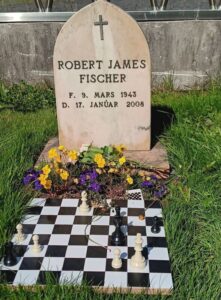
Bobby Fischer’s grave at the Laugardaelir Church cemetery in Iceland.Chess Master Bobby Fischer.
Chess icon Bobby Fischer rests peacefully in Iceland.
If you’re wandering around the small Icelandic town of Selfoss and stumble upon a grave with a chessboard setup permanently mid-game, don’t be alarmed. That’s just Bobby Fischer still playing from beyond. Yes, the American chess prodigy who beat the Soviets at their own game in 1972 ended up spending the final years of his life in Iceland, of all places. And not just visiting, either. He died there in 2008 and is buried just outside town at the Laugardaelir Church cemetery. Locals and tourists alike occasionally reset the pieces on the stone chessboard above his grave, as if waiting for Fischer to make one last move.
So how did a Brooklyn-born genius end up in the land of volcanoes, fermented shark, and elf belief? Well, Bobby Fischer wasn’t exactly your average guy. After becoming a Cold War hero by defeating Boris Spassky in Reykjavík during the 1972 World Chess Championship, Fischer spiraled into a bizarre stew of paranoia, anti-Semitic rants (despite being Jewish), and an intense hatred for the U.S. government. In 1992, he violated U.S. sanctions by playing a rematch in Yugoslavia and was considered a fugitive ever since. In 2004, he was detained in Japan over passport issues, and that’s when Iceland, the site of his most famous victory, stepped in and offered him citizenship. He accepted and never left.
Bobby Fischer was more than just a chess player. He was a recluse, a genius, a conspiracy theorist, and somehow still a Cold War icon. He didn’t just play chess; he made it theatrical, like it was a heavyweight title bout—Ali vs. Frazier, but with bishops and pawns. His 1972 match didn’t just crown a champion; it symbolized a moment in time when one American took on an entire Soviet machine and won with brains alone. Even people who couldn’t tell a rook from a knight tuned in.
Today, Iceland honors its odd adopted son with the Bobby Fischer Center, a small museum in Selfoss just down the road from his grave. It houses memorabilia, old photos, and chess boards, and tells the story of the man who put Iceland on the map for something other than hot springs and volcanic ash clouds. While Fischer may have gone off the rails in many ways, Iceland gave him a final chapter that was quiet, snowy, and checkmated in peace.
*Most Icelanders don’t have traditional surnames. Instead, they use patronymics, based on their father’s name, with “-son” or “-dóttir” added. So, if your dad’s name is Bjorn, you might be called “Bjornsson” or “Bjorndóttir.”
*Names Must Be Approved. The Icelandic Naming Committee must approve all new baby names to ensure they fit Icelandic grammar and tradition. Names not on the approved list can be rejected!
*Unique Language. Icelandic has changed very little from Old Norse, and many Icelanders can still read ancient Viking texts with little difficulty.
*Iceland Has No Standing Army. Despite being a NATO member, Iceland has no army, navy, or air force. Defense is handled through agreements with other countries.
*Everyone is in a Database. Because of the small population, Icelanders can look up their family tree through an app called “IslendingaApp” to avoid dating a close relative!
*No Mosquitoes. Iceland is one of the few places on Earth with no mosquitoes. The climate and lack of shallow standing water make it an unwelcoming environment for these pesky insects.
*Elves and Hidden People. Many Icelanders believe in Huldufólk, or “hidden people.” Some construction projects have even been altered to avoid disturbing areas believed to be inhabited by elves.
*Beer Was Banned Until 1989. Believe it or not, beer was illegal in Iceland until March 1, 1989. The day is now celebrated annually as “Beer Day.”
*Northern Lights Wonderland – Iceland is one of the best places to see the Aurora Borealis, especially between September and April.
*Geothermal Energy Powers the Country – Thanks to its volcanic activity, Iceland heats nearly 90% of homes using geothermal energy and has some of the cleanest electricity in the world.
*You Can See Tectonic Plates – In Thingvellir National Park, you can walk (or even snorkel!) between the North American and Eurasian tectonic plates.
* Icelanders consume more Coca-Cola per capita than any other nation.
*In Reykjavik, you can swim outdoors year-round thanks to geothermal-heated pools.
*The Icelandic horse has five gaits, including the smooth-as-butter tölt.

 Sweden and Iceland Stories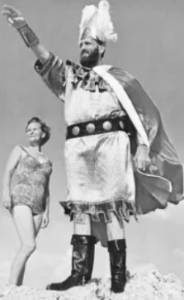

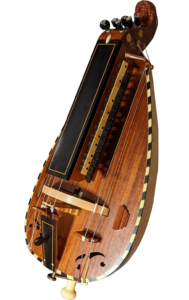 ician told me it was called a hurdy gurdy, I immediately thought it sounded less like the name of an instrument and more like something Uncle Fred mutters when he stubs his toe. He explained that the instrument had been around for nearly 1,000 years, which made it only slightly younger than some of the festival patrons. The earliest ones were so large that they required two players. One person cranked while the other pushed the keys. In my family, this would have ended in an argument involving an accusation of cranking too fast or not fast enough. Yet despite its age, the hurdy gurdy was treated like treasure by the fancy folks of eighteenth-century France, who adorned it with strings like royal furniture.