When Fiddles Were Considered Evil In Norway
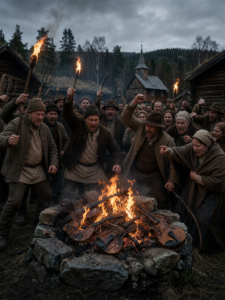
Today, the fiddle is one of the most recognizable sounds in Norwegian folk music. It is hard to imagine a Norwegian wedding, dance, or folk festival without the sound of strings filling the air. But there was a time when some Norwegians believed the fiddle was connected to the Devil. In parts of Norway, traditional fiddlers could be viewed with suspicion because their music was associated with dancing, drinking, and behavior that church leaders considered sinful.
The concern was not really about the wooden instrument itself. It was about what happened when people played it. Dancing was sometimes considered dangerous because it could lead young people away from church teachings and toward drinking, fighting, and sexual behavior. A fiddle could bring people together for an evening of dancing and celebration. To strict religious leaders, that kind of entertainment could become a temptation. If the Devil needed a musical instrument to cause trouble, the fiddle was a good choice.
Norway also had a strong tradition of religious movements that emphasized personal behavior and self-control. In some communities, especially where pietism was influential, people were expected to avoid activities that might encourage sin. Music was not necessarily the problem. Hymns and religious songs were welcomed. The problem was music that encouraged dancing or other forms of entertainment. A splellman playing fiddle at a dance was viewed differently from an organ playing inside a church.
Norwegian folklore took these fears even further. Stories developed about talented fiddlers who had learned their skills from supernatural beings. One famous figure is the Nøkken, a mysterious water spirit who was said to live in lakes and rivers. According to legend, the Nøkken could teach a musician to play the fiddle with incredible skill. There was usually a catch, however. The musician might gain amazing talent but risk losing his soul. Stories like these helped connect the fiddle with the supernatural world.
Of course, not every Norwegian believed fiddles were evil, and fiddlers continued to play. The instrument became an important part of Norwegian culture, particularly through the hardingfele, or Hardanger fiddle. These instruments accompanied dances, celebrations, and traditional songs. Over time, the fiddle moved from something that could be viewed with suspicion to something that helped define Norwegian identity. The same instrument that once worried religious authorities eventually became one of the sounds people associate most strongly with Norway.
There is a wonderful irony in this history. The fiddle was sometimes feared because it could make people dance, but today those same fiddle traditions are treasured as an important part of Norwegian heritage. Perhaps the Devil never had much to do with the fiddle after all. Maybe the real problem was that the music was too good to sit still.